To get the whole story, you’ll need a particle accelerator.
During the (northern) summer of 2021, UNESCO’s International Center for Documentary Heritage (ICDH) built a team of nearly 50 people, spanning across time zones and academic fields from physics to bookbinding preservation to study historic texts to expand our knowledge of the culture and history of printing technology in the Eastern and Western worlds.
At Stanford University in California, where physicists at the SLAC National Accelerator Laboratory eagerly awaited samples, researchers are in the process of analyzing these texts. They want to know what happened in the history of printing between the production of the Jikji, a Korean Buddhist document published in Heungdeok Temple in 1377, the earliest printed book on record, and the Gutenberg Bible, printed in Mainz, Germany in 1455. AtlasObscura.com
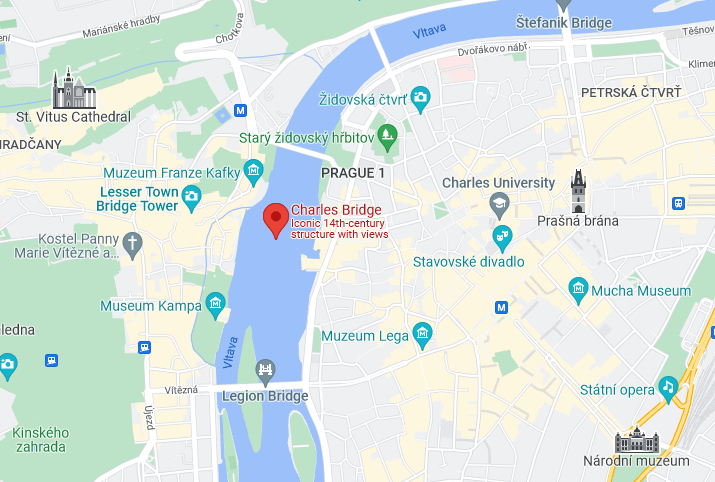
[W]hile modern structures can take months or even weeks to finish, those of a more ancient or medieval age were constructed over decades and repaired, rebuilt, and restored over centuries. Consider the Charles Bridge, which crosses the Vltava (Moldau) river in Prague. OpenCulture.com
Archeologists estimate that the 700-year-old ship was likely a cargo vessel and part of the Hanseatic League trading network.
“If the ship was a part of the Hanseatic League, then it played a crucial role in European history. The trading alliance reached its peak between the 13th and 15th centuries and extended as far as England and Russia.” allthatsinteresting.com
At its height, in 1343, it hosted the Archbishop of York but after a later owner died fighting for Richard III at Bosworth in 1485, it was confiscated by the crown and seemingly vanished a century later. BBC.com
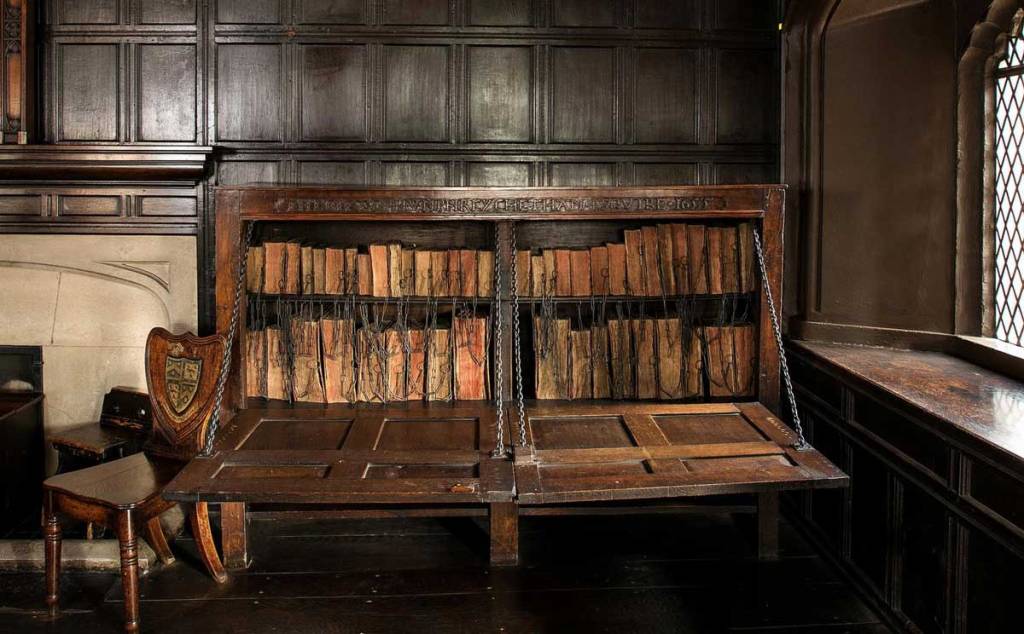
The library from the parish of Gorton, one of five bequeathed by Humphrey Chetham in the 1650s, now held at Chetham’s Library in Manchester. Only two of the libraries have survived intact.
Medieval England knew two forms of divorce. The first, and overwhelmingly the most important, was divorce a vinculo matrimonii (from the bond of marriage), a ruling by the Church that a marriage had never been valid. This turned on some default in the couple’s consent to it, either that consent had been coerced or they themselves were canonically incapable of giving it (because, for example, they were underage or too closely related to make a valid marriage). The second, what might be termed a separation, was divorce a mensa et thoro (from bed and board), a ruling that the couple need no longer live together on the grounds, most commonly, of cruelty or adultery. TheHistoryOfParliament.com
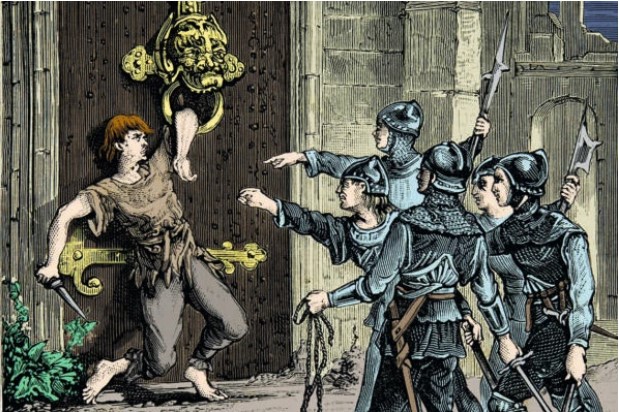
If you were convicted of a serious crime in 13th-century England, you could expect to be put to death – unless you made it to the sanctuary of a church first. Kenneth F Duggan reveals the attempts made by criminals to elude justice by fleeing to holy ground… HistoryExtra.com
In 2018, archaeologists described a truly fascinating puzzle. It looks like this medieval Italian man went through life with a knife attached to his arm, in place of his amputated hand. ScienceAlert.com






 Richard III Society