Even after the Normans conquered England, Old English (the oldest form of the vernacular) continued to be spoken throughout the country. It continued to be used in books produced in monasteries there for at least a century after William the Conqueror’s invasion.
One excellent example of this is found in the Old English Illustrated Herbal. Originally made in Canterbury in the early 11th century, this manuscript contains Old English translations of a collection of Latin remedies, illustrated with numerous paintings of plants and animals. blogs.bl.uk
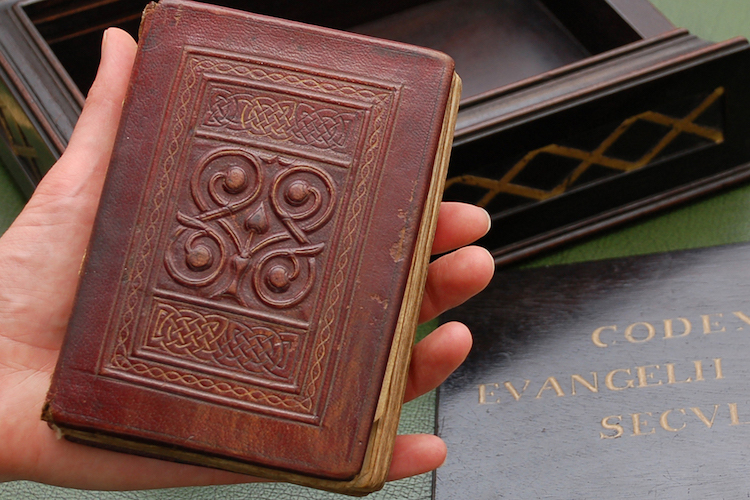
Europe’s oldest intact book has been discovered after being closed inside a hermit monk’s coffin for over 400 years. It will go on display at the British Library as part of an exhibition featuring prized manuscripts like the Lindisfarne Gospels and Beowulf. The show is a once in a lifetime opportunity to see how medieval Anglo-Saxons depicted their own culture through early writings. MyModernMet.com
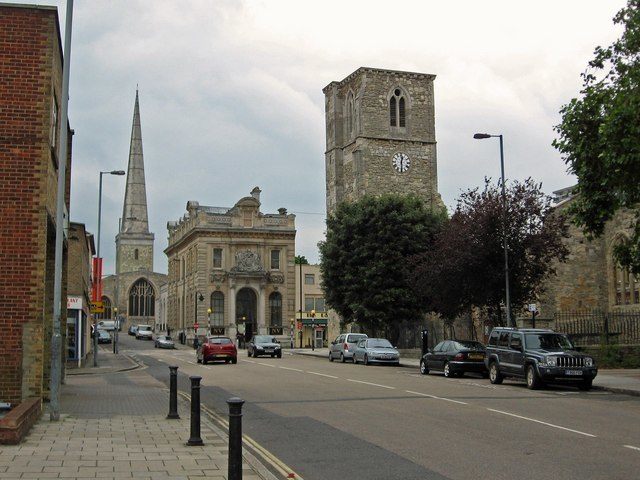
Now a memorial to merchant sailors and Titanic victims, this medieval church was destroyed by bombing raids in 1940.
The Holyrood Church ruins are on the corner of High Street and Bernard Street. Southampton has numerous other medieval relics spread throughout the otherwise modern city, and it’s worth taking the time to seek them out. AltasObscura.com
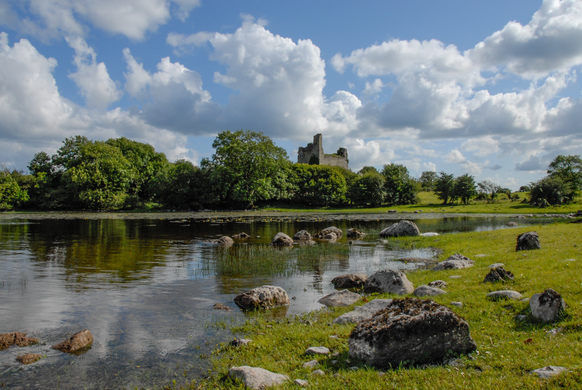
Wander among the abandoned ruins of this once-powerful medieval town.
On a sleepy, off-the-beaten-track peninsula jutting into Ireland’s River Shannon, you can wander through Rindoon, one of Ireland’s most enigmatic deserted medieval towns. Though it was once one of the area’s most important towns, it has slept undisturbed for centuries. AtlasObscura.com
In 1580 in the British diocese of Ely, an Englishman named William Sturns went down in history for an unusual crime. His alleged malfeasance? Stealing not one, not two, but three cheeses. Ultimately, he was found not guilty, but this alleged felony was dutifully recorded in an archive spanning 200 years of crimes in Ely. AtlasObscura.com
The greatest Archeological and historical discoveries are often found in the most unlikely of places. This was the case on December 2015, when construction laborers were left in awe while renovating a men’s prison in Gloucester, England.
Back around the year 1110, the rulers of Gloucester built an impressive castle ”similar to the Tower of London,” It had 3 chapels, 2 drawbridges, and walls that were a solid 12 feet wide. histecho.com
In 1463, London outlawed the shoes of its fanciest men. These dapper lords had grown ridiculous in their dapperness, and had taken to ambling streets shod in long, carrot-shaped shoes that tapered to impish tips, some as long as five inches beyond the toe. These shoes were called “crakows” or “poulaines” (a term also used to refer to the tips alone), and the court of King Edward IV eventually found them offensive enough to pass a sumptuary law prohibiting shoe tips that extended over two inches beyond the toe. atlasobscura.com
Given at the Theoretical Archaeology Group Conference on December 19, 2017.
Abstract: There have been various approaches applied to study and understand the nature of the late Medieval book, including historical, palaeographical and codicological methods, and yet, traditionally, little attention has been given to the book as a form of material culture, especially by archaeologists. This paper will briefly discuss the different approaches that have been applied in recent years to the study of the book, before giving a detailed consideration of how the archaeological investigation into late Medieval book fittings excavated from English monastic sites offers an innovative approach to the wider study of the late Medieval book.
To move beyond simply defining the various types of late Medieval book fittings, an interdisciplinary approach can be applied to further understand the nature of this type of material culture, including the books on which fittings were used, the influences of different monastic orders, their geographical distribution and the significance of their deposition. It is the purpose of this paper to demonstrate how the archaeological investigation of book fittings provides not only the opportunity to study book fittings typologically but also to place such material culture into its wider social and cultural contexts within late Medieval society. medievalists.net



 Richard III Society