
Fieldwork discoveries
Recent excavation by Cotswold Archaeology’s fieldwork team revealed the remains of a medieval farm on the flat clayland of the Severn vale. cotswoldarchaeology.co.uk

Recent excavation by Cotswold Archaeology’s fieldwork team revealed the remains of a medieval farm on the flat clayland of the Severn vale. cotswoldarchaeology.co.uk
The Wars of the Roses were a series of bitter conflicts that tore apart England and Wales during the late middle ages, killing tens of thousands of people, sending the crown bouncing back and forth between the houses of Lancaster and York – and eventually leading to the collapse of the Plantagenet dynasty and the rise of the Tudors. telegraph.co.uk
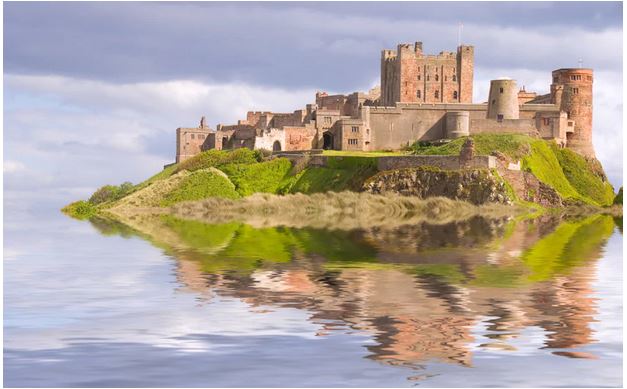
Read more from Dan Jones, author of The Hollow Crown.
The Wars of the Roses was a bloody contest for the throne of England, a civil war fought out between the rival houses of York – whose symbol was the white rose – and Lancaster – whose symbol was the red rose – throughout the second half of the 15th century.
After 30 years of political manipulation, horrific carnage and brief periods of peace, the wars ended and a new royal dynasty emerged: the Tudors. HistoryHit.com
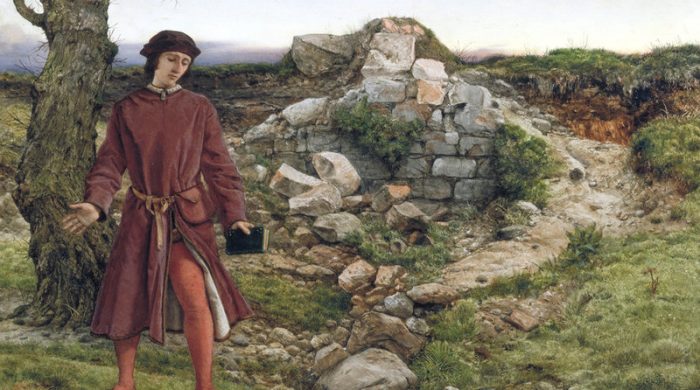
Read more to discover 16 key figures from the wars.
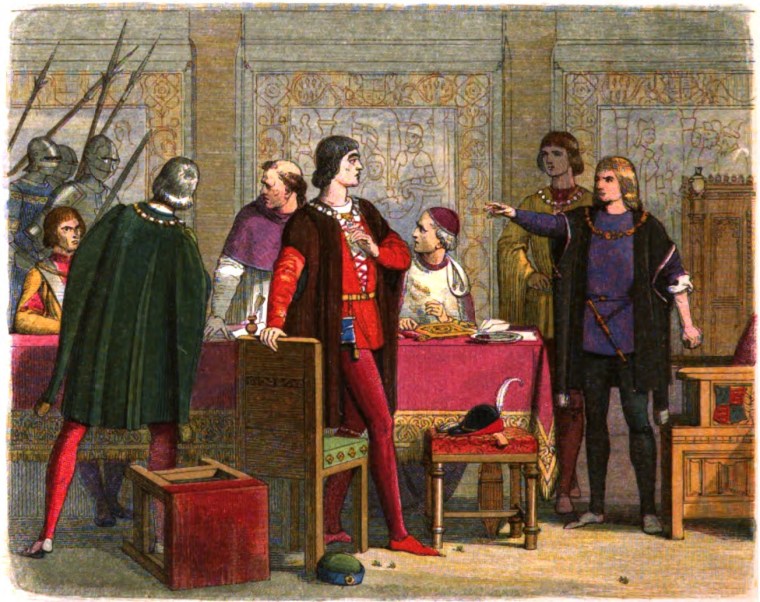
The latest podcast from History Today looks at the rise and fall of the House of York in 1483.
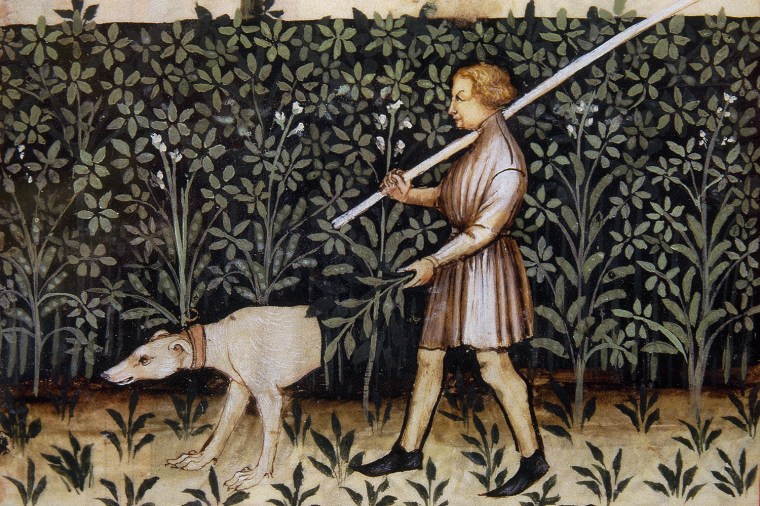
The later middle ages, and the years immediately following, were one of the most ‘doggy’ periods in history. Hunting and hawking were by far the most popular sports of the leisured classes, who also liked keeping dogs simply as pets; and the rest of the population used them for protection and herding. Performing dogs were much admired, and people loved to hear fabulous yarns of the extraordinary fidelity and intelligence of dogs. historytoday.com

This stone set into the wall at the west end of Beaumont Street is understood to have been erected by Alan Brown, a former Vice-Provost of Worcester College. It was restored by Worcester College in 2004, after it was hit by a vehicle in 2003 and left lying in the hedge of 24 Beaumont Street. oxfordhistory.org.uk
A tiny group of scholars added 500 words and made 5,000 revisions to the Dictionary of the Irish Language. AtlasObscura.com
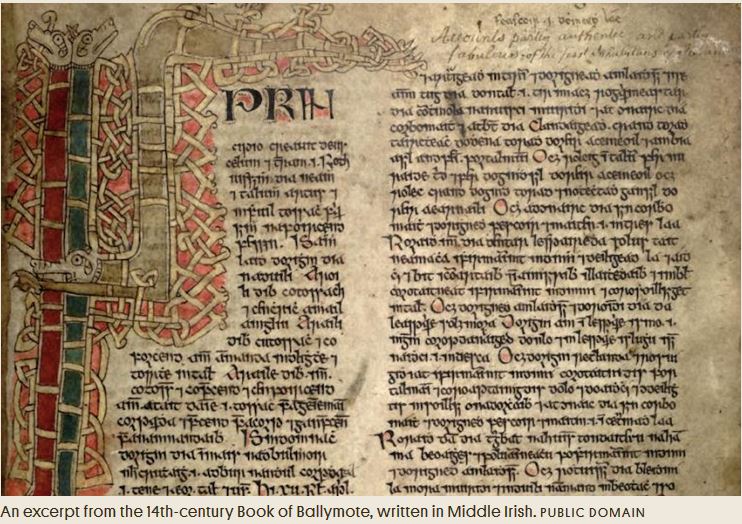
Updating the lexicon of a thousand-year-old language may seem like a foolish task for anyone living in the 21st century. But understanding the words medieval people used offers insight into the lives they lived—how they behaved, what they believed, and how they saw the world, says Máire Ní Mhaonaigh, a medievalist at Cambridge, who worked with Arbuthnot, in a press release.
Visitors come to Hereford Cathedral each year to wonder at one of the world’s greatest Medieval works – the Mappa Mundi. But this visit offers another unique treasure – The Chained Library.
Here 229 Medieval manuscripts including the 8th century Hereford Gospel and books from later centuries are preserved, each chained for security to the library shelves as they were in the 17th century. While such libraries previously existed throughout Europe only the Hereford Chained Library has survived.
In this programme the Cathedral’s librarian Dr Rosemary Firman takes us on a tour and tells its story. historywm.com
19 minutes
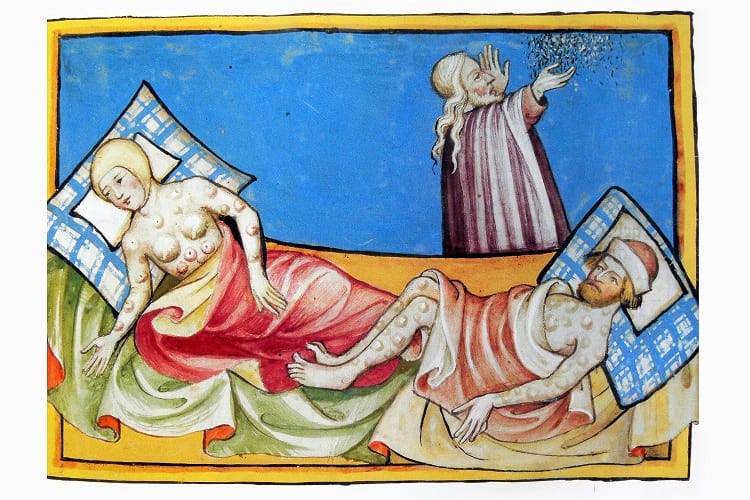
A cruel fact about life is that diseases exist. Especially infectious, life-threatening variants that once spread can kill millions of people in a short space of time, in very painful circumstances. An example is smallpox which is estimated to have killed between 300-500 million people in the last 12,000 years. Still, no cure exists, but vaccinations are very effective at stemming the development of the disease. Another is bubonic plague, a bacterium-based disease which wreaked havoc in Europe and Asia, most infamously in the year 1346. The devastation was so serious that it became known as the Black Death, with the Latin word for terrible, mistranslated to black. Although for many, both terrible and black perfectly explains the dark situation throughout the Old World at this time. ststworld.com
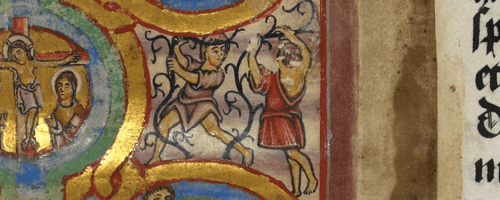
Pluck. Crush. Cork. Medieval calendars remind us that September is the month for making wine. If planting and pruning vines fall to the month of March, September is the time for cashing in on all the effort. Blogs.bl.uk
 Richard III Society